Despite frequent sexual intercourse for at least one year, 8 to 12% of couples of reproductive age suffer from infertility. Hormonal, vascular, or immune disorders do not fully explain all cases of failure. An imbalance (dysbiosis) of the vaginal microbiota has already been linked to numerous gynecological diseases and various complications related to pregnancy and in vitro fertilization failures. Vaginal dysbiosis observed in these women is characterized by a diverse and abundant vaginal microbiota, with increased bacteria associated with various intimate infections (bacterial vaginosis, vaginitis, urinary tract infection) and, conversely, relatively fewer lactobacilli.
According to the authors’ calculations, the pregnancy rate exceeded 72% when the vaginal microbiota was dominated by more than 90% lactobacilli, but dropped to 34% in the opposite case. The composition of the vaginal microbiota, particularly the depletion of lactobacilli, appears to play a fundamental role in repeated pregnancy failure.
The tests for identification and/or quantification of pathogens responsible for sexually transmitted diseases, vaginal ulcerations, and vaginal infections (vaginosis) include:
AVANTAGES :
→ Confort : chez soi, en quelques minutes, sans douleur
→ Un support médical : BLEU – Laboratoire LABIO – une plateforme médicale sécurisée
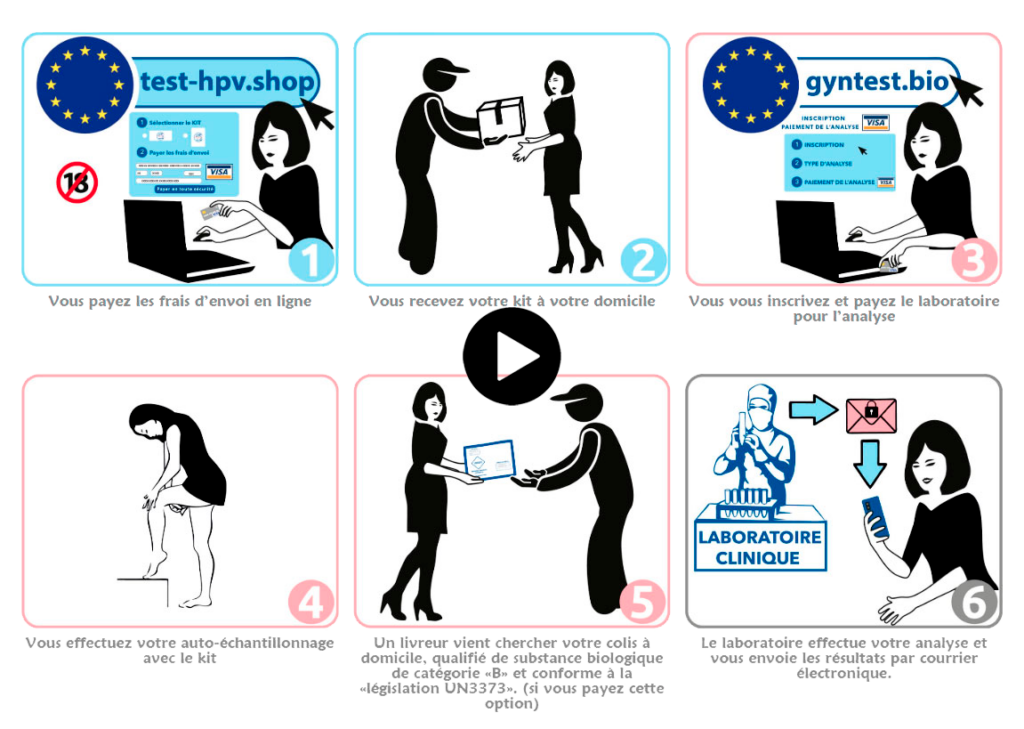
→ Une logistique simple :